Our Co-op Physical Science class has two more sessions. So, we are going to do Experiments 14.1, 14.2, 15.2, and 15.4. Additionally, I have quite a few materials for optical illusions, color mixing, etc. for summer science camps. One activity the kids are doing is the Exploratorium's camera obscura with Pringles' cans, which works! Another favorite is CD spinners or CD patterns. This earlier blog post has the original link for a series of CD templates first published in the June/July 2010 Family Fun magazine. This original link is buried on a Disney site. However, Mocomi's site has good instructions and another pattern. I also have a Colorama kit for the kids to try.
So what about Sound? Have you heard of the Exploratorium's Head Harps? Tomorrow, the kids will try Head Harps with spoons and hangers, cotton string, and yarn. I want them to experiment with the length of string or yarn, too, to see if it matters. The Exploratorium Snacks has these ideas and loads of other experiments. The Exploratorium has published a number of science books, such as one of my favorites, The Science Explorer, from which I have drawn ideas for years! I will have the kids take plenty of photos.
Tuesday, May 26, 2015

Thursday, May 21, 2015
Soar! Stream Assessment
The kids went to Back Creek at the Winchester Frederick County Conservation Club this morning, 5/21/15. This was the first time the kids did a stream assessment. Five students attended, which was fine for a first trip: Allen, Tristen, Akshita, Hunter, and Roshelle. Two teachers chaperoned. Back Creek is the closest stream to our watershed. Basically, we established the field site. The air temperature was 55 degrees F and the water temperature was 5 degrees C. It was misting the entire time at the stream, from 9:10- 11:10. Back Creek appeared murky with a lush riparian area adjacent to the creek. Tulip poplars dotted the stream side. The students tested the stream speed, turbidity, and temperature. They had some difficulty with the kick seine; next time, we are bringing a better seine and an expert. After collecting and testing water samples, the students returned. The Conservation Club is perfect for future stream assessments.


Stream Photos and More photos
Back Creek. 5/21/15
Winchester Frederick County Conservation Club
Hellgrammite, snail, and crawfish
Ecocheck. Test strips Nitrate 0-20 Nitrite 0 Total hardness 150-300 Alkalinity 180 Ph 6.5
Roshelle 6.0, 6.5
Temperature 5 degrees Celsius
Turbidity 22.5, 24, 24, 22
Lamotte nitrate- phosphate low range. 0.2ppm Nitrate 0.2 ppm Phosphate 1.0 ppm Speed 27 ft Time 23, 19, 20.23
Odor: musty odor
Creek slippery slope, bottom rocky with sandy spot Rocks with cobbles, large slate like sheets of rock Riparian not eroded, tulip poplar along creek
Conococheague-Opequon Watershed -- 02070004
Conococheague-Opequon
Watershed Profile
Watershed Name: Conococheague-Opequon
USGS Cataloging Unit: 02070004
WV 2nd Congressional District
MD 6th Congressional District
PA 9th Congressional District
VA 10th Congressional District
PA 19th Congressional District
USGS Cataloging Unit: 02070004
WV 2nd Congressional District
MD 6th Congressional District
PA 9th Congressional District
VA 10th Congressional District
PA 19th Congressional District
Stream Photos and More photos
Back Creek. 5/21/15
Winchester Frederick County Conservation Club
Hellgrammite, snail, and crawfish
Ecocheck. Test strips Nitrate 0-20 Nitrite 0 Total hardness 150-300 Alkalinity 180 Ph 6.5
Roshelle 6.0, 6.5
Temperature 5 degrees Celsius
Turbidity 22.5, 24, 24, 22
Lamotte nitrate- phosphate low range. 0.2ppm Nitrate 0.2 ppm Phosphate 1.0 ppm Speed 27 ft Time 23, 19, 20.23
Odor: musty odor
Creek slippery slope, bottom rocky with sandy spot Rocks with cobbles, large slate like sheets of rock Riparian not eroded, tulip poplar along creek
Wednesday, May 20, 2015
Apologia Chemistry: Gas Law Crush Cans
Video one explains how to crush a can and video 2 explains the science.
Apologia: Home School and Portfolios
As an educator I evaluate a number of portfolios each year for several families. I am accredited in Virginia and West Virginia, in Biology and Chemistry. West Virginia requires home-school families to seek the services of an accredited teacher to evaluate their portfolios each year or for the children to take a standardized test annually. Many families opt for portfolios. I also teach at a small private school part-time; the school requires students to complete a portfolio for all of the core subjects. They have developed a simple evaluation form to accompany portfolio submissions. The form lists the student's assignment, asks the student to write a sentence about what he or she learned, and what he or she might change with regard to the finished product. The teacher adds notes and comments about each activity. At this private school, all significant projects, tests, labs, etc. must have an evaluation form accompanying the project in a large binder which serves as the portfolio.
I like the idea of a portfolio. I think the portfolio could be electronic or a hard copy. Screen shots from projects can be printed and added to a binder with evaluations. I think some of the evaluations should have more depth. For example, I like the kids to do a reflection after completing the Science Fair:
Science Fair Evaluation:
What did the judge ask you?
Did the judge ask you anything surprising?
What did you say?
How did you manage your time?
What would you do differently next time? (Imagine that you would repeat or continue the same project.)
Evaluate the process, the display, research, presentation. How would you rate this experience?
Recently, after the students completed a series of dissections, I asked them to write an essay to evaluate the process to include a description of each of the animals, a comparison of similarities and differences from the simplest specimen, the worm, to the most complex, the frog. Lastly, I required a summary explaining the purpose of dissections as part of comparative morphology.
These essays allow students a chance to reflect and write about an experience. These are often one page essays. Yes, I do have to prompt kids! When I have kids write evaluations, I write the questions on a board or distribute copies. Even teens may need help, especially if they have a learning difference. I will ask a student to tell me which was the simplest specimen and explain why. For example, the worm did not have many organs, but seemed full of dirt instead. Often, the child can express himself verbally, but need help writing. I repeat back his statement and help him spell the words or have him use a laptop or iPad to write the essay.
Here is where an electronic portfolio is invaluable! The kid can create a blog, document the process of dissection with photos, summarize his findings, and write an evaluation on-line in the blog. Voila! The blog can serve as part of an electronic portfolio. Get in the habit of taking photos and videos. If you post comments to social media about your home-school experiences, a screen shot can be copied to your blog or printed as a hard copy for a binder.
I like the idea of a portfolio. I think the portfolio could be electronic or a hard copy. Screen shots from projects can be printed and added to a binder with evaluations. I think some of the evaluations should have more depth. For example, I like the kids to do a reflection after completing the Science Fair:
Science Fair Evaluation:
What did the judge ask you?
Did the judge ask you anything surprising?
What did you say?
How did you manage your time?
What would you do differently next time? (Imagine that you would repeat or continue the same project.)
Evaluate the process, the display, research, presentation. How would you rate this experience?
Recently, after the students completed a series of dissections, I asked them to write an essay to evaluate the process to include a description of each of the animals, a comparison of similarities and differences from the simplest specimen, the worm, to the most complex, the frog. Lastly, I required a summary explaining the purpose of dissections as part of comparative morphology.
These essays allow students a chance to reflect and write about an experience. These are often one page essays. Yes, I do have to prompt kids! When I have kids write evaluations, I write the questions on a board or distribute copies. Even teens may need help, especially if they have a learning difference. I will ask a student to tell me which was the simplest specimen and explain why. For example, the worm did not have many organs, but seemed full of dirt instead. Often, the child can express himself verbally, but need help writing. I repeat back his statement and help him spell the words or have him use a laptop or iPad to write the essay.
Here is where an electronic portfolio is invaluable! The kid can create a blog, document the process of dissection with photos, summarize his findings, and write an evaluation on-line in the blog. Voila! The blog can serve as part of an electronic portfolio. Get in the habit of taking photos and videos. If you post comments to social media about your home-school experiences, a screen shot can be copied to your blog or printed as a hard copy for a binder.
Apologia Chemistry: Gas Laws
The Chemistry class is finishing gas Laws. Today they completed the Charles' Law lab by making a gas thermometer. This lab takes quite a bit of time to measure the volumes and repeat several trials; the kids will graph the data and do some analysis next week. They also crushed cans, an excellent activity to coincide with gas laws. Lastly, we went over the data from last week, Boyle's Law Lab. The kids averaged the data and graphed it using the graphing calculators. In their lab notebooks, they posted the data tables, the equation of the line, and an explanation of Boyle's Law. I have several graphing calculators so the kids can do the graphing together using the stat function and testing different math models to see the best fit before recording the equation of the line. Basically, Boyle's Law is that the greater the pressure, the less the volume is. I asked the kids if the volume could go to zero. One kid said, "No." Yeah! The gas molecules can be squeezed together; they have a volume themselves. Next week, we are going to average the data from today's lab and graph it on the graphing calculators, too. Next week's question is "How do we know that 0 Kelvin is -273 degrees Celcius when we cannot attain absolute zero?" The kids will extrapolate the data from today's lab using the graphing calculators.
Flinn's Gas Law Stations are also a great way to introduce Gas Laws!
Low and behold! I found a POGIL activity: Gas Variables.
Flinn's Gas Law Stations are also a great way to introduce Gas Laws!
Low and behold! I found a POGIL activity: Gas Variables.
Apologia Physical Science: Module 13 Uodate
The Physical Science Co-op meets once a week for three hours. This morning the kids did the lesson on Module 13. Our class had already studies atomic theory with the Periodic Table. They had created time-lines mapping the development of Atomic theory. I had the kids complete the inventory of their person exposure to radiation first. (I have a Chemistry class which overlaps. This gave me time to go over the instructions for their lab.) We talked a little about radiation. Gamma radiation is the most penetrating form and similar to x-Rays. The average person in the U.S. receives an annual dose of about 360 milli-rems. How much radiation is too much? The answer varies. Most of our knowledge about radiation exposure comes from research from atomic bombs,atomic testing, and accidents, such as Chernobyl. Next the kids watched the two short videos posted in earlier blogs. We talked about fission and splitting atoms in terms of releasing a load of energy owing to the strong nuclear force holding the atom together. During our discussion, radon, the recent nuclear disaster in Japan, the controversy over Iran all came up. You can see that nuclear energy is a rich source for a lively discussion. My emphasis is the need to safeguard fissionable materials.
Here are the kids doing half life with pennies and the ping pong ball on the mouse trap.
The class did the penny half life experiment with three trials and a graph. As a tip, I went to the bank to get rolls of pennies to streamline the time. I left them to read the article on the Iceman. Next class, we are going to explain half-life in terms of dating Otsi, the Ice-man.
The topic of nuclear energy lends itself to a wide range of subjects: Three Mile Island, Chernoby, how a nuclear power plant operates, a comparison of breeder versus boiling water reactors, politics in Iran or Iraq. Did you know there is tourism to Chernobly? Would you go? See? Module 13 can launch many interesting discussions!
Here are the kids doing half life with pennies and the ping pong ball on the mouse trap.
The class did the penny half life experiment with three trials and a graph. As a tip, I went to the bank to get rolls of pennies to streamline the time. I left them to read the article on the Iceman. Next class, we are going to explain half-life in terms of dating Otsi, the Ice-man.
The topic of nuclear energy lends itself to a wide range of subjects: Three Mile Island, Chernoby, how a nuclear power plant operates, a comparison of breeder versus boiling water reactors, politics in Iran or Iraq. Did you know there is tourism to Chernobly? Would you go? See? Module 13 can launch many interesting discussions!
Friday, May 15, 2015
WA: Soar!
Wow! Today the kids came through for the first planting day at Winchester Academy. Soar is a comprehensive environmental program and an example of project based learning or PBL. The high school class has taken the leadership for Soar. The kids have selected the projects: two raised bed, 18 trees, and 100 lbs. of seed for the play yard. Look! Everything planted, painted, and mulches! Yeah!
http://m.imgur.com/pRpwBrv,l6CGKE8,g3DtOHn,xYnBjjH,c4kefz3,rpvmwe8,OzwLO6K,1LhmpBq,d2Z1AIx,TWvzZ6b,NW9XttB,lxouok9,owbrjEF,G1HHFY6,Ep4RaOv,Z12wUcX,47D3CGP,vuSly2t,sVQgjAu,KpYBTPF,TmwGQQa,ZR60W0s,EibvCYX
http://m.imgur.com/pRpwBrv,l6CGKE8,g3DtOHn,xYnBjjH,c4kefz3,rpvmwe8,OzwLO6K,1LhmpBq,d2Z1AIx,TWvzZ6b,NW9XttB,lxouok9,owbrjEF,G1HHFY6,Ep4RaOv,Z12wUcX,47D3CGP,vuSly2t,sVQgjAu,KpYBTPF,TmwGQQa,ZR60W0s,EibvCYX
Thursday, May 14, 2015
WA Physical Science: Electricity and Magnetism Demos
The girls in Physical Science did a great job with the demos today for electricity and magnetism
http://m.imgur.com/v3j22DH,rM1jAph,2Kzpzt4,62sAwsr,gPdFxje,yeYdMX7,Z7I7AhO,448w9hO,Wjzmi9W
Students in Grades 2-5 took part. The girls demonstrated several experiments from their textbook and others we had done in class. The girls demonstrated static cans, Apologia's 12.2 electroscope, jumping pepper, squishy circuits, series circuits, and an electromagnet. I demonstrated different magnets. We ran out of time; so, I left the materials for the classes to do more exploration. There may be time after the tests next week. The Physical Science class has performed four demonstrations for the kids. They benefit everyone. The Physical Science class has to understand the experiments; the kids love to have the teens demo. I think the teachers derive ideas from these sessions, too.
http://m.imgur.com/v3j22DH,rM1jAph,2Kzpzt4,62sAwsr,gPdFxje,yeYdMX7,Z7I7AhO,448w9hO,Wjzmi9W
Students in Grades 2-5 took part. The girls demonstrated several experiments from their textbook and others we had done in class. The girls demonstrated static cans, Apologia's 12.2 electroscope, jumping pepper, squishy circuits, series circuits, and an electromagnet. I demonstrated different magnets. We ran out of time; so, I left the materials for the classes to do more exploration. There may be time after the tests next week. The Physical Science class has performed four demonstrations for the kids. They benefit everyone. The Physical Science class has to understand the experiments; the kids love to have the teens demo. I think the teachers derive ideas from these sessions, too.
Wednesday, May 13, 2015
Apologia: Nuclear Science
What else can you do to better understand nuclear energy? Half Live Penny Lab or M&M Half Life. So what? Why do I want the kids to understand half life? I want them to understand carbon dating. The most interesting approach is Oetzi, The Ice Man. How do scientists estimate his age? Besides the story is cool. This time I want to try Mouse trap Fission. I have seen it demonstrated, but haven't tried it myself.
Apologia Physical Science: Module 13 Nuclear Energy Lesson
In the past two posts, I shared two videos which introduce the atom and the fundamentals of nuclear fission. When people hear the word, radiation, they freak. All of us are exposed to radiation when we get an x-Ray or take a plane ride. My class will complete a personal exposure chart or here Radiation Dose. Once kids assess their exposure to radiation, they want to know how much is too much. PBS has an answer. But individuals can respond differently to radiation. I like to have my kids complete the personal exposure chart and then ask them specifically one way they can do to minimize their exposure to radiation. The answer? Don't smoke!
Apologia Physical Science: Module 13: Radioactivity
Our Physical Science Co-op class reviewed the Periodic Table, atomic number, etc. early in this past school year. Hence, our focus now is on nuclear energy, one of my favorite topics. Prior to 9/11, I would take Chemistry classes to the Dominion Power plant in Louisa, VA for tours. We were able to tour the training center and simulator. I took a week-long program sponsored by Dominion Power through the University of Virginia before the University disassembled their nuclear reactor.
In the last post, I shared my favorite introductory video. The video below is Part 2 of the series on Nuclear Energy. It explains nuclear fission.
In the last post, I shared my favorite introductory video. The video below is Part 2 of the series on Nuclear Energy. It explains nuclear fission.
Apologia Physical Science Module 13 The Forces inCreation
Module 13 begins with the structure of an atom. This video, Energy from the Atom, was once included in a curriculum published through Northeast Utilities System. This fifteen minute video has a clear explanation, one I have used to introduce atoms for years.
Video Questions:
1. Atoms are made of three fundamental particles: ______, ______, and _______.
2. Protons have a _______ charge.
3. Neutrons have a _______ charge.
4. Electrons have a _______ charge.
5. Which Greek philosophers devised the earliest theories about atoms?
6. Who was the first modern scientist to propose an atomic theory?
7. Which scientists contributed to our current model of the atom and its subatomic particles?
8. Describe the nuclear force.
9. Differentiate between atomic number and atomic mass.
10. Describe three isotopes of hydrogen.
1. Atoms are made of three fundamental particles: ______, ______, and _______.
2. Protons have a _______ charge.
3. Neutrons have a _______ charge.
4. Electrons have a _______ charge.
5. Which Greek philosophers devised the earliest theories about atoms?
6. Who was the first modern scientist to propose an atomic theory?
7. Which scientists contributed to our current model of the atom and its subatomic particles?
8. Describe the nuclear force.
9. Differentiate between atomic number and atomic mass.
10. Describe three isotopes of hydrogen.
Apologia Chemistry: Learning Management Systems
Public and private schools frequently use learning management systems (LMS) to organize lessons, share links, and store documents. Popular sites include Blackboard and Google Classrooms. Years ago, a colleague introduced me to nicenet.org, a free website. When you visit the website, click 'join a class' and enter the key code: YZ@923220Q90 for the Chemistry class. Over the past ten years, the schools and college where I taught changed LMS frequently; I have used over a dozen different systems. Sometimes, the school changed systems mid-year! I stored some of my favorite resources on Nicenet for easy access. It is not as robust as say Blackboard- but, it is easy to use and free. Home-school families may elect to create a class on Nicenet to organize their materials, syllabi, and documents for portfolio evaluations. I think between Blogger and Nicenet, a family could compile a formidable electronic portfolio.
Apologia Chemistry: Module 12 Gas Laws Charles' Law or Gas Thermometer
The Chemistry class just began Module 12. I like to start with labs, especially to teach gas laws. I can refer back to their experience when we get to the math. The class collected the Boyle's Law lab data, averaged the trials, and ran out of time. Next class, we will finish the graph analysis with the graphing calculators. The kids are going to make a Gas thermometer, using a side arm flask, graduated cylinder, beaker, stopper, thermometer, and a bucket of ice for a lab on Charles' Law.
Charles' Law is the relationship between temperature and volume. In this lab, the kids are creating crude gas thermometers. The first step is to start a boiling water bath using a larger beaker, 1000 mL. (Home Training Tools sells the equipment at fair prices.) Fill a bucket with ice water. The bucket must be large enough to submerge the side-arm or filter flask. Next measure the actual volume of the flask by filling it with water and measuring the volume with a graduated cylinder. Empty the flask. The volume of water equals the volume of air the flask can hold. Here is the procedure. Stopper the flask, cover the side arm opening with one finger and submerge it in the water bath. Allow it to sit in the boiling water for about one minute. Keep your finger on the arm of the flask, remove the flask from the hot water bath, and plunge the flask into the bucket of ice water, and remove your finger from the side arm once the flask is under water. Note that some water entered the flask. Measure the amount of water in a graduated cylinder. The trapped gas in the flask compresses, allowing water to enter. Record the temperatures of the boiling water bath and the ice water in the bucket. Repeat the process at least three times.
To graph the data, you have two points: hot and cold. The initial temperature of the gas in the flask is the same as the temperature of the boiling water. The corresponding volume is the volume of the flask. The cold temperature is the temperature of the ice water in the bucket and its volume is the original volume minus the amount of water which entered the flask. These two points can be graphed and an extension is to extrapolate to the temperature of absolute zero and zero volume.
To graph the data, you have two points: hot and cold. The initial temperature of the gas in the flask is the same as the temperature of the boiling water. The corresponding volume is the volume of the flask. The cold temperature is the temperature of the ice water in the bucket and its volume is the original volume minus the amount of water which entered the flask. These two points can be graphed and an extension is to extrapolate to the temperature of absolute zero and zero volume.
Apologia Chemistry: Boyle's Law Module 12
Module 12 is about Gas Laws. Start with lab! I like to start with Boyle's Law Lab using pipers, food coloring, tap water, and books. (Don't say we never use our textbooks!) The instructions above and video below demonstrate the procedure with a pinch clamp. My colleague, Dave Rickman, heat sealed the pipets for this lab. We added the food coloring and sealed the ends with a sterno lamp. The kids record pressure in books and volume in millimeters. They sealed 10 or so pipets to get a good average to graph. Once they collected the data, the kids graph the pressure and volume data with the graphing calculator and summarize the relationship between pressure and volume. This gives them another opportunity to use the graphing calculator's stat function, too.
http://m.imgur.com/eG9rJ9a,YzVbXRM,4azIOVT,3SZuBmg
http://m.imgur.com/eG9rJ9a,YzVbXRM,4azIOVT,3SZuBmg
Apologia Chemistry: Acid-Base Indicators
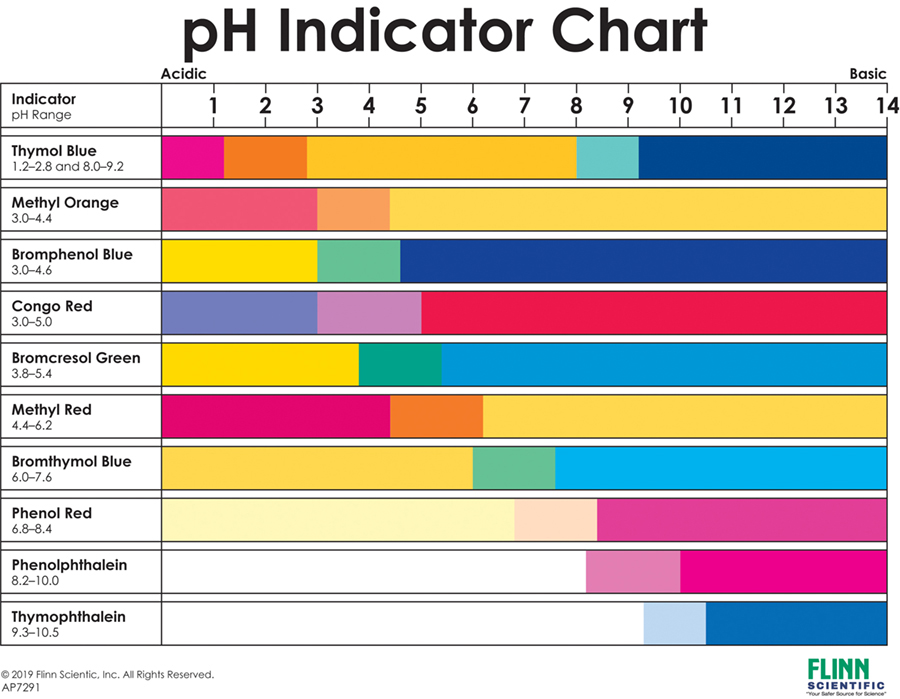
The Chemistry class is completing the acid-base lesson. I ordered several indicator solutions: phenol red, bromothymol blue (BTB), phenolphalein (PHTH), cabbage powder, universal indicator, and litmus. We had hydrochloric acid (HCl) and sodium hydroxide (NaOH) solutions. We had had issues with the acid dilutions when the kids did the titrations. I contacted the company because the acid stock solution was not within the concentration parameters on the bottle. So what pH are the acid and base? We measured the solutions with a pH meter. I wanted the kids to become familiar with a variety of pH indicator charts. First the class took the pH of a sample of the HCl and NaOH. Next they added a drop of indicator solution to the samples and compared the colors to the indicator charts. Next, the kids made dilutions, measured the pH, and repeated the test with a range of indicators. I wanted them to see if the colors matched up, reinforce the relationship between concentration and pH, and understand how the indicator charts are created. Below are pictures.
http://m.imgur.com/dWc6HXU,Ueg3Z8G
http://m.imgur.com/dWc6HXU,Ueg3Z8G
Apologia Physical Science: Electricity and Magnetism
The Physical Science class is completing Module 12. The Apologia textbook doesn't have a ton of material on magnetism. We started class with a brief discussion on domains, magnetic induction, and electromagnets. For this lesson on magnetism, I bought a variety of magnets: a cow magnet, paddle magnets, bar magnets, horseshoe magnets, discs, etc. I think kids learn more about electricity and magnetism by doing a series of experiments. For whatever reason, this time, I had a terrible time getting an Electromagnet to work. Usually a nail, copper wire, and a battery work well. Not this time! Lydia tried different nails, different wire, nothing. Last week, same story. I ordered a kit on Amazon. Initially it did not work either. We checked all the connections, batteries, etc. Finally, I noticed there was no metal rod it the copper coil. Success! We talked about how electromagnets are used to move scrap. Everyone had a turn assembling and testing the electromagnet kit. Generally, we had more success than failure; but kids learn from failure, too.
I used another Physical Science textbook, which did have a series of magnetic experiments to try, such as What is the source of magnetism? The kids used a kit to build an electroscope. The wire and nail didn't work-so I ordered a kit. I wanted the kids to see a solenoid. They tried to build a speaker, too, which did not operate, either. I scoured the house for an am/fm radio, which one of the boys took home to see if he can fix it to test the speaker. Now, the electroscope (12.2) worked extremely well. How do magnets behave? is one of the activities using disk magnets and it worked, too. This classzone link has two more experiments to try. Below are photos from today's class.
Photos:
http://m.imgur.com/Mdl4uiI,kbOqZJ2,wVWhiug,c0SwBNf,m7y9gHp,aZmVRFN,ZeX0mO0,IPPyJlJ
I used another Physical Science textbook, which did have a series of magnetic experiments to try, such as What is the source of magnetism? The kids used a kit to build an electroscope. The wire and nail didn't work-so I ordered a kit. I wanted the kids to see a solenoid. They tried to build a speaker, too, which did not operate, either. I scoured the house for an am/fm radio, which one of the boys took home to see if he can fix it to test the speaker. Now, the electroscope (12.2) worked extremely well. How do magnets behave? is one of the activities using disk magnets and it worked, too. This classzone link has two more experiments to try. Below are photos from today's class.
Photos:
http://m.imgur.com/Mdl4uiI,kbOqZJ2,wVWhiug,c0SwBNf,m7y9gHp,aZmVRFN,ZeX0mO0,IPPyJlJ
Monday, May 11, 2015
WA Earth Science: Soar and Service Learning
The Earth Science class is planting this Friday. They are involved in a PBL with service learning. This is a big week! I have included the kids in every aspect of the project. They have selected to build a second raised bed, plant trees, re-seed, and creat WA in stone with landscape timbers. I explained that we needed a time-line, to call Mis Utility, to plan the order for Lowes, arrange delivery, stage the equipment, creat a planting map, coordinate with volunteers, create student groups, etc. The kids have had several lectures reviewing the principles of watershed dynamics and the value of green infrastructure to improve the campus and mitigate excess stormwater runoff. Tuesday, the kids will help unload the materials. On Thursday, they will stage the plants and equipment and build the WA with crushed stone. They hope to get started painting the timbers navy blue to match the school's colors. Friday is the big day! I kids have been schooled on interviewing with the press. I am excited for the kids! This group is taking charge of their project. We have spent some time discussing the next steps, such as the stream assay as well as plans for next fall. Say a little prayer things go well!
WA Life Science: Dissections
The Life Science Class is completing a unit on comparative morphology. We began using MRS GREN to compare nine major animal phyla. The students used a variety of dissection packets. My advice is to have zoology dissection manuals, photos, different Life Science and Biology texts all available during dissections. No one source helped locate major organs. I had a good dissection packet from Carolina and two college level Zoology manuals I had picked up years ago when I taught two semesters of Human Biology. See earlier posts for the links to the packets.
The cow eye dissection and the sheep's brain dissection packets were extra credit. I had bid on Biology labpaqs on EBay which had an eye and a brain. I let three of the student do those dissections because they had completed all of the material assigned before their class-mates. This link, Dissection pix, has some photos of the MRS GREN chart and photos of some of the dissections.
The final assessment is an essay which will go in each student's portfolio. I do some consulting and am a strong proponent of alternative assessment. Conference participants always ask me if I practice what I teach. I do! I look for ways to promote critical thinking, especially as a means to reflect on a unit of study. This time, my solution is an essay.
The essay includes a description of each representative animal in the nine major phyla, a comparison from the simplest to the most complex animals, their similarities and differences, and a summary explaining the purpose of comparative morphology. The students were instructed to use their charts, dissection packets, and notes to write the essay.
The cow eye dissection and the sheep's brain dissection packets were extra credit. I had bid on Biology labpaqs on EBay which had an eye and a brain. I let three of the student do those dissections because they had completed all of the material assigned before their class-mates. This link, Dissection pix, has some photos of the MRS GREN chart and photos of some of the dissections.
The final assessment is an essay which will go in each student's portfolio. I do some consulting and am a strong proponent of alternative assessment. Conference participants always ask me if I practice what I teach. I do! I look for ways to promote critical thinking, especially as a means to reflect on a unit of study. This time, my solution is an essay.
The essay includes a description of each representative animal in the nine major phyla, a comparison from the simplest to the most complex animals, their similarities and differences, and a summary explaining the purpose of comparative morphology. The students were instructed to use their charts, dissection packets, and notes to write the essay.
Subscribe to:
Posts (Atom)
-
The class is completing their Designer Baby blogs. Finally. Yes,I sat on top of them in class. I still think the time investment is wort...
-
 The Co-op is reviewing for a series of cell quizzes and beginning with paper plate cell cycle models and mitosis with yarn. The first t...