Friday, March 27, 2015

Apologia Chemistry: Module Eight Tips

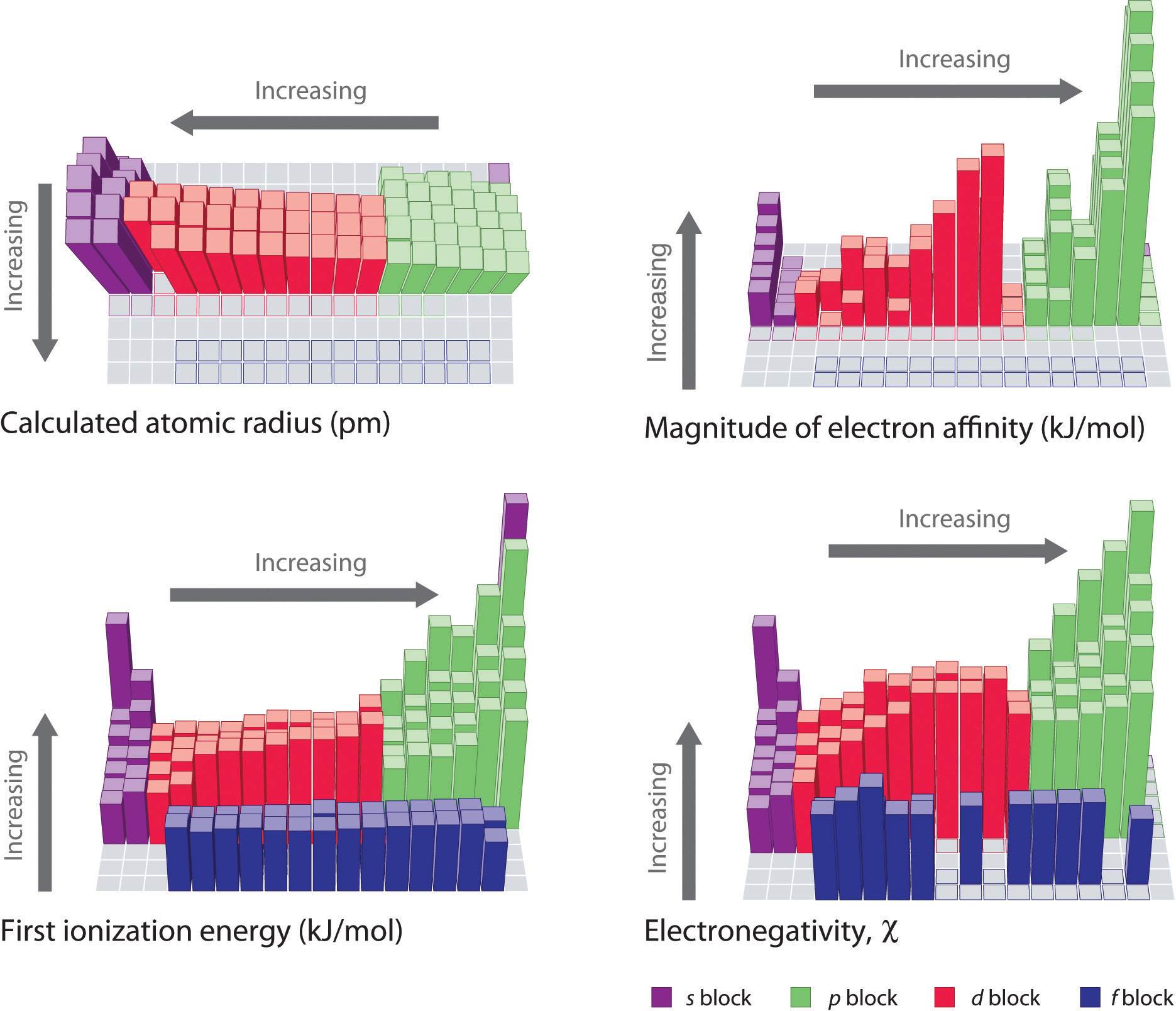
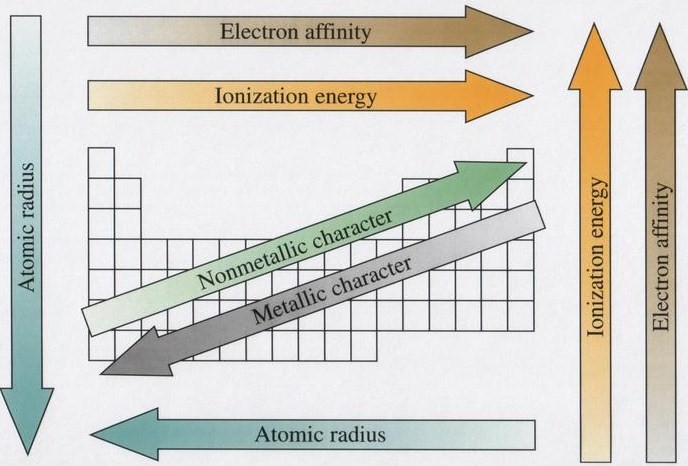
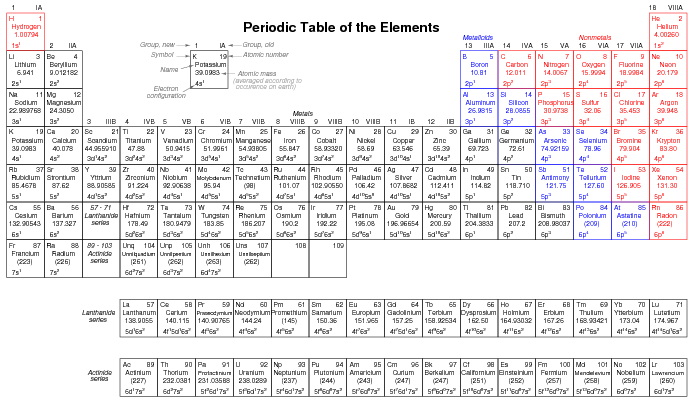
Today I wnet over the Periodic Trends with the kids in my Co-op class.  Let me share how I approach this instruction.  Last time, we spent time explaining and practicing electron configurations.   Keep a copy of the notes or sample configurations out, especially Hydrogen to Argon.  Just a note-the short-hand version is best to display the valence electrons for this lesson.  Next, have a copy of a Periodic Table with  Electronegativity and charts with Periodic Trends. (This one has a difference perspective, which can help.)

Now, help the kids see the patterns.  I use Electronegativity to explain the concept of periodic trends or patterns in the Periodic Table.  Linus Pauling was a professor and used a GPA scale to compare an element's ability to grab electrons.  My kids study this trend first, particularly Group I and Group 7 elements.  Periodic Trends are described going from left to right on the Table and top to bottom in each group, typically involving only 'main group' or representative elements.

Once the class has the idea of a trend, each child or group receives a different trend: electron affinity, metallic and nonmetallic character, first ionization energy, atomic radius, ionic radius, density, melting point, boiling point, and electronegativity.  I chose metallic and nonmetallic character, atomic radius, and first ionization energy this time.  When I have a large group, pairs of students get a trend to model.  The team must define the trend, describe the trend, and defend their model.  When I have a big class, I set out a variety of materials for their models: paper plates, reaction plates, toothpicks, straws, markers, etc.  This time, I elected to have the Co-op use the straws, reaction plates, and clay.  I did insist they measure the straws to make them proportionate.

We did not have time for the Periodic Tend Game; but I did show the kids how to play.  Basically, you throw a die on a Periodic Table.  When it landed, I asked the kids to estimate the element's electronegativity, relatively high or relatively low, and explain.


Apologia Chemistry: Module Nine Plotting Trends


Here is a video of one of the Co-op students explaining his model of atomic radius from the last Chemistry post.

Apologia: Chemistry Periodic Trends Module Eight


The Chemistry Co-op completed the Periodic Trends in Module Nine.  We used the idea from Flinn's Plotting Trends lab.  The kids used the charts and other resources I mentioned in the last post and each identified a different trend: first ionization energy, atomic Radius, electronegativity, electron affinity, and metallic and nonmetallic character.  We went over a couple trends together before they created their own models.  I gave the kids reaction plates, straws, Crayola's Model Magic clay (on sale at Five Below), scissors, and rulers.  After completing their models, the kids took turns explaining the concept, defining the trends, and defending their models.  The next post has a video of on of the kids demonstrating and explaining his model.

Thursday, March 26, 2015

WA Life Science: Dissections

The class just finished Genetics with DNA-finally!  The students have two more major units; comparative morphology and Anatomy and Physiology.  The dissection specimens and lab packets are in and I pulled the trays and dissection kits.  We are ready!  our class is taking a traditional approach to comparative morphology, beginning with simple animals and comparing increasingly complex organisms.  The goal is to compare factors affecting all living animals: movement, reproduction, sensitivity, growth, respiration, excretion, and nutrition; one mnemonic is MRS GREN.  The kids will need to review taxonomy: Kingdom, Phylum, Class, Order, Family, Genus, and Species; a mnemonic I like is 'Katie poured Coke on Father's good suit'.  The kids will create a chart to study representative animals, almost a Zoology mini-course.

Lastly, Life Science will tackle

Wednesday, March 25, 2015

Apologia Chemistry: Periodic Trends

Years ago, I went to a Chemistry conference and another teacher brought a styrofoam model of Periodic Trends.  Genius!  She mentioned Flinn Scientific's Plotting Trends Activity, which uses straws and reaction plates.  I took the idea and adapted it into more of an inquiry based exercise.  I assemble a variety of materials, such as toothpicks, straws, markers, clay, etc. and distribute paper plates and copies of a periodic table shrunk to fit a paper plate.  Next, each group gets a different trend to model and may use color, toothpicks, etc. to model the trend.  Students must be able to define and explain their trend, their choice of materials, and a key.  Friendly Chemistry has a similar exercise using playdough, spaghetti, and a periodic table.  This time, my kids are getting reaction plates, clay, and straws to model these trends: atomic radius, electronegativity, electron affinity, metallic and nonmetallic character, and first ionization energy, with a summary of the trends.  Here is a fun game  to reinforce the trends.  I have a set of Flinn's Periodic Chart Lab; NASA has a set of cards which are part of a unit on the Periodic Table, which students can arrange into groups, if your students needs a bit more study of the Periodic Table.  Our next class is going to be packed!


Apologia: Chemistry Module 7

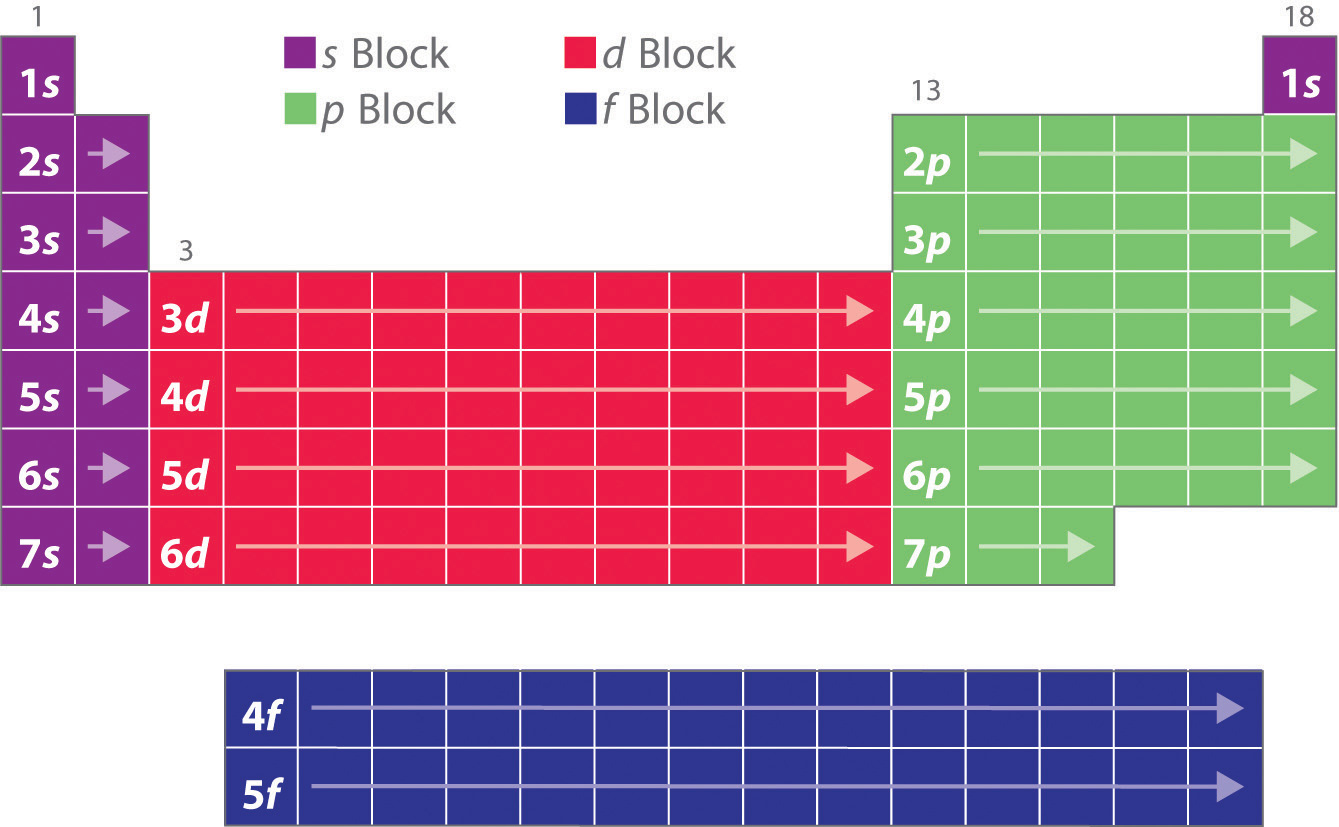
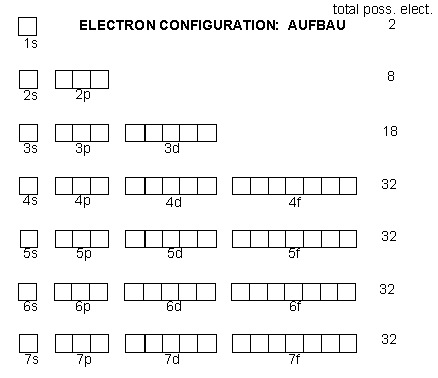
Last week the Chemistry class discussed electron configurations in the context of Quantum theory.  Today, we reviewed how to write configurations using a chart similar to Chem Tutor Electron Configuration Scheme, and Tutorial  which helps kids understand the mechanics of assigning electrons.  In Module Seven, of Apologia's Chemistry text, Dr. Wile instructs students to use their periodic tables to assign the electrons and determine their configurations. This Periodic Table identifies the different 'blocks': s block, d block, p block, and f block, which means their valence electrons are in the s, p, d, or f orbitals.  This Periodic Table has the orbitals identified.  For example, Scandium is labeled '3d1' and Titanium is 3d2.  This Chart has the electron configurations superimposed on the Periodic Table.  The bottom live is to connect the idea that the rows or periods on the Periodic Table are energy levels.  The elements are grouped by their number of valence electrons.

Understanding how to write electron configurations can take some time.  Initially, the kids need to start at Hydrogen and write them one at a time, checking their work to see if it is correct.  Once they get the mechanics, orbital diagrams, orbital notation, and a short-hand method can be introduced.  We also went over two exceptions, Cr and Cu.  Assuredly, this is a lot for one lesson.  I use electron configurations to show why metals tend to form positive ions and nonmetals tend to form negative ions.  Metals, such as Na or K need only to shed one electron to become stable; whereas F or Cl only need to gain one electron to become stable.  Now is the time to point out that Noble gases do not react unless combined with Fluorine under extreme conditions because their electron configurations are already completely filled.  It is important to draw these connections.  I use the configuration to explain why the sodium ion is +1 and the chlorine ion is -1 and mention that both are so reactive they are combined into compounds as salt.  I think Module 7 is a pivotal lesson in chemistry.

I do use worksheets for this unit and assign a timeline of the development of Atomic Theory and
Quantum Theory.  Prentice Hall's worksheets are good to review the concepts: Electron Arrangement in Atoms,  Electrons in Atoms, Electron Configurations, Electron Configuration Activity, and a Puzzle.


Apologia: Physical Science: Blog

The kids are in the middle of their blogs projects, recording, summarizing, and selecting labs.  The different groups are collaborating.  Sometimes one student likes to be in front of the camera and another adamantly does not.  Some of the kids are more comfortable with the math and others with the demos.  Some groups have ten or more posts and others have combined their videos and posts.  I challenged the kids to think of their audience as other home-school students trying to tackle the Forces and Motion modules.  Are there other demos which correspond well with the different topics.  I hope one pair references The Physics portion of the Young Explorers text.  Stay tuned.

https://plus.google.com/104105015979116568238/posts/CxbnZn4yQH7

Tuesday, March 24, 2015

WA Soar!

WA has won a grant from the Toshiba America Foundation.  Follow the kids here at ScienceWith Kids blog to monitor their progress.

Monday, March 23, 2015

WA Earth Science Blog Project

One of the Earth Science students, Ryan, is willing to share his blog at http://ryansavalanchesandlandslides.blogspot.com/
I had emailed his mom to make sure she and Ryan were on board.  I wanted you all to see the results from this project.  Ryan is a freshman.  I was happy with his blog posts.  See what you think.

Friday, March 20, 2015

WA Earth Science:Blog Project

The blogs are still in varying states of completion.  The kids wrote and posted test questions for their peers to answer using the resources provided in their blogs.  The class was instructed to post their answers as comments or in an email.  I hope to share one of the blogs after receiving permission from the student and his mom and dad.

Thursday, March 19, 2015

Designer Babies Life Science Project

The Life Science class is mid-way through the Designer Baby project.  This group of sixth and seventh graders were instructed to create a blog.  In their blogs, the kids are answering several questions:
   1. What is a designer baby?
   2. What is In Vitro Fertilization or IVF?
   3. What is Pre-Genetic Diagnosis?
   4.  What are 'savior siblings'?
   5.  Where do you stand?  Should parent's design their babies?  What does the existing technology allow?  Where do experts see designer babies heading in the future?

Some students breeze through these types of assignments; so, I added a little for them.  Jodi Picoult's novel, 'My Sister's Keeper' centers on a 'savior sibling'.  Her novel, 'Handle With Care', addresses the issue of 'wrongful birth' law suits.  There are plenty of web sites that discuss these two books.  I asked the kids to see if they could locate case studies, too.

The kids have creative freedom and may add videos, web sites, images, and links to their blog posts.  This project has benefits for students with learning differences, who may gravitate to videos for their explanations.  Gifted students might do compare the case studies and post their opinions.  My goal is to inject a bit of technology and get the class to write.  

WA: Life Science Comparative Morphology

The Life Science class is starting the unit on animals, next week and will perform several dissections.   First an overview Comparative Morphology.

Wednesday, March 18, 2015

Apologia and WA Physical Science: Blog Project for Forces and Motion

This week all of my Physical Science students began a blog project.  I am a believer in authentic, alternative assessment, such as a juried science fair competition.  I subscribe to the theory that the kid should be able to demonstrate his or her understanding in greater depth than just passing a multiple choice test.  The blog project is an assessment of Modules 9-13 in Apologia's Physical Science text.  Here is the challenge: the kids have to decide which are the key concepts in Modules 9-13, select representative problem sets, demonstrate how to solve these problems, select activities and labs, and document all of these components in a blog.  The kids set up their blogs and wrote introductions.  (I have six students in this Co-op class and two kids drew names for partners.)  Each student must write,  instruct, and video problem solutions correctly with units.  I recommend practice and for them to upload their videos to my YouTube channel.  YouTube videos are a cinch to upload to Blogger. (Note  the clapper icon on the tool bar.)  It is especially easy to embed your videos from YouTube to Blogger using an iPad or a laptop.  The kids will need a gmail account to access Blogger.  I recommend that they use a parent's gmail account; the parent can access and delete at will.  The trickiest aspect to setting up a blog is the unique address; Blogger will indicate whether or not the address selected is available. The kids will want time to customize their backgrounds.  Be sure to have them show you their results.  Stay tuned!


Apologia Chemistry: Even More on Electron Configurations

One thing that helps kids to write electron configurations is a chart.  Here are two my students have found to be helpful.  Chemistry Tutor has a good explanation for using these charts.  My kids are in the middle of practicing how to use the chart, interpret configurations, short cuts, and other orbital diagrams-all while associating the configurations to the elements on the Periodic Table.  Whew!

Apologia Chemistry: Even More on Electron Configurations

My kids are finishing time-lines on the history and development of Atomic Theory and Quantum Mechanics.  Electron configurations are key to better understanding why groups of elements belong together in rows and periods.  These two videos outline the history and explain how to assign electrons into configurations.

Apologia Chemistry: More on Module 7

Prior to an overview on Module 7, my kids did a flame test lab, using Flame Colors Test Kit that has a spectroscope from Home Science Tools and Flinn Science Flame Test Lab.  Flinn Science Flame Test Kit does not come with a spectroscope; it does have an excellent lab packet.  For Module 7, I bring out the spectroscope as a prop and we discuss the Flame Test lab and how each salt has a different color flame.  Why?  The idea behind using the spectroscope with the flame tests is to associate a specific wavelength with the different colored flames from the salts.  In reality, the spectroscope works well with a fluorescent bulb and is difficult to get results from the flame, even with a good spectroscope, such as the one purchased from Home Science Tools.  But the spectroscope makes an excellent prop during the discussion of Quantum Theory and Electron Configurations.  Quantipum Theory sprang from the physics of light.  I use a number of analogies to teach electron configuration.  Here are much better videos than my poor explanations.

Apologia Chemistry: Quantum

The kids are finally in Module 7.  I know, I know!  How are we going to finish by the end of May?  We are meeting two mornings this week and next, doubling our co-op contact hours.  We will regroup next Friday to see how many extra sessions are needed to finish well.  The kids wrapped up the Can You Make 2 Grams Lab and weighed their precipitates today, which they allowed to dry a week.  I went over my guide for writing a lab report with the kids.  (See the earlier post.)  I also reviewed how to calculate percent error from their results. We discussed potential sources of error; H. said that some of the filtrate may be in the filter paper.  She forgot to write the weight of the paper in pencil on the filter paper to avoid scraping off the results and reducing the amount recovered.

Module 7, at last!  Earlier, the kits did a flame test lab I purchased from Home Science tools, which came with a spectroscope.  The video above is from one of my public school classes doing flame tests.   Today, we went over the development of Quantum Theory and how to write electron configurations.  More on the next post.


Friday, March 13, 2015

Apologia and WA Physical Science: Create a Physics Blog!

I teach both a Co-op class and at a private school.  My Earth Science class is creating a blog which has been a hit.  We missed so much class time, I had to get creative. It occurred to me that a blog would be perfect to sum up a unit on Forces and Motion that both of my Physical Science classes at WA and the Co-op are doing, now.  For my purposes, this blog is a form of alternative assessment and exposes kids to new tools.  My philosophy is that technology supports instruction; certainly kids need exposure to technology, but in ways that enhance instruction.

First, the kids need a gmail account to access Blogger.  The kids can use a parent's account and their posts can remain private.  That is a parental decision.  My kids like to publish their work publicly and monitor the number of views.  I have them send me the links to their blogs for evaluation.  Here is what the Physical Science students are going to do.  After they set up a blog, the kids need to identify all of the key terms, ideas, formulas, and units under the heading of Forces and Motion.  My kids just created concept maps with these terms.  The concept maps can be created electronically using free IHMC cmap tools.  The Cmaps can be saved as jpg or pdf files and posted to their blogs.

Once the kids decide which ideas or concepts are most important, they should try to locate a demonstration or lab activity which explains the concept.  We are doing a bunch of fun experiments which the kids have videoed and described.  My kids are going to practivce the activity, video it with an explanation, post it to you-tube, and embed the videos in their blogs.

The kids have also done several problem sets.  I am going to have them post sample problems and locate video, say Khan Academy, which instructs kids how to do the calculation.  Alternately, the kids can write out the problems and explain how to proceed to solve them.  There are several types of basic calculations.  The kids can use their notes, problem sets, and texts to decide which problems to demonstrate.

Lastly, the kids are going to locate games, virtual labs, webquests, songs, etc. for their blog.  I will keep you posted on their progress.  With a parent's permission, I will link to their blogs so you can see the results.  My Co-op has already posted many videos to You-tube; I think they are going to like this project.

Wednesday, March 11, 2015

Apologia and WA: Penny and Balloon

The Penny in the balloon demo became more of an experiment.  The kids started with pennies, tried dimes (the serrations burst the balloon), washers, foreign coins, ping pong balls, and water.  So a simple demo became an active inquiry activity. Fun!  One mor note.  I like the kids to film their demos as a form of informal evaluation by adding an explanation for the demo or lab.  Here is the video, one more time.


More on Lab Reports: Can You Make Two Grams?

Formal lab reports should be type-written; some instructors even dictate the font and type face. The first item is the title, usually centered on the first page.  Next, is a section with background information about the lab.  For example, a report on a stoichiometry lab should include an explanation of stoichiometry, and for this lab, precipitates.  Lab reports have several pitfalls; one is that too often background information is lifted, cut and pasted into the report instead of being paraphrased or quoted.

The materials and procedures should be written in complete sentences rather than bullet points.  For example, "The materials include the following: two beakers, a glass stirring rod, 50 mL of distiller water, a filtration assembly, and 2.9 grams of calcium chloride."  Note that ideally the report is written in the third person, present tense, active voice, and indicative mood.  Students may use the past tense instead.

The balanced chemical equation may be neatly hand written; typing in subscripts and formulas can bring students to tears.  Some of my students have simply written the word eqypuation in their reports.

The results should be concise.  For example, "There are 2.4 grams of precipitate."  Explanations, possible sources of error are confined to the discussion.  If more than two grams of precipitate are recovered, one potential source of error is that the precipitate is still wet or the mass includes the filter paper.

One standard conclusion is "More study is indicated."  Students might conclude that more trials are indicated or a different combination would produce more precipitate; the acetates are always tricky.

Kids find lab reports onerous.  I assign mine to coincide with their two least favorite labs.  Then, they won't hate lab, just stoichiometry.

Lab Reports

Students should be able to write a formal lab report.  I have my chemistry students write two formal reports: Can You Make 2 Grams? and Leftover Aluminum Wire.  Below is a score sheet for the lab report and a sample of the background portion of the lab.  (I am sorry to have to use such a clumsy work around to post these two documents.)  The students should explain the underlying science, use complete sentences, provide a balanced equation, include the materials and procedures, cite the results, be able to discuss possible sources of error, and draw conclusions.


Leftover Aluminum Wire

Apologia Chemistry Atomic Theory

Snow, Science Fair, and flu have contrived to impede our progress in Chemistry.  The kids bogged down in Stoichiometry and we are finally clawing ourselves out.  We are scheduling extra classes to catch up because we want to finish by the end of May; June is already packed with camps, the church yard sale, and VBS.  We are going to start Atomic Theory.  My kids are creating a time-line of scientists who contributed to the development of Atomic theory and Quantum theory.  The time-line must be done to scale and include the following: birth date, death, and major contribution.  I have my kids create one or two time-lines to ensure they know how to make one.  Students can use Online timeline technology, Excel, or a sheet of graph paper.  I usually have the kids work out the timeline in pencil on a sheet of graph paper and encourage them to color code the different scientists.

Apologia and WA: Physics Fun


These labs are terrific for Physics demonstrations or Science camp!


The Physical Science classes are still working on forces.  After the kids finished a concept map and more problem sets, they did several fun labs.

Tuesday, March 10, 2015

Shenandoah Regional Science Fair

The kids had a great experience at the Shenandoh Regional Science Fair.  Look here for some photos on Pinterest Board.  It was a long day.  Doreen Devore at James Madison University does an outstanding job recruiting judges, organizing the categories, providing yummy treats.  Kudos!

Friday, March 6, 2015

Apologia: Physical Science Physics Resources

Readers may appreciate some sources for Physics materials appropriate to Physical Science.  Apologia's Young Explorers Chemistry and Physics text for Middle ?School has clear text and simple experiments.  I encourage students to read elementary books if the material is confusing; often then, the information in a higher level text is easier to understand.  NSTA's Take Home Physics book has loads of simple labs.  The web site has a sample.  Ask your library to see if they can get a copy through an inter library loan because the book retails for around $25.

TOPS Science is another place for top notch materials.  The authors once worked with the Peace Corps and developed high quality science experiments that use simple materials.  I use the Electricity and Magnetism manuals for Physical Science and let the kids work through the activities.  Many home-school families use their manuals to teach the majority of elementary science.

For exciting, original experiments, it is hard to beat Steve Spangler Science.  Steve has excellent videos and kits to buy.  Another favorite for supplies and cool materials is Educational Innovations.  The prices are very fair.  Check out this site for balancing birds and the soda bottle balance board, perfect for Center of Gravity.

Another reliable source for cool Physics demonstrations or activities is The Exploratorium; posted here, is an idea to use a meter stick to demonstrate center of gravity.

One last tip.  Every summer, I host a science camp at my church.  Last year's theme was Mad Science.  Check out my Pinterest board.  You might be interested in the Discrepent Events board, too, which depict a range of Physics principles.

Apologia and WA: Physical Science More Physics

I try to locate activities for every key concept.  Apologia's Young Explorers: Chemistry and Physics has a number of interesting activities for Forces and Motion, such as a balloon and penny to demonstrate centripetal force.

M


Rocket balls are a terrific way to demonstrate momentum or simply a transfer of energy.  


Another fun activity is Egg Toss, or Egg Throw.  Kids love this!  You can throw a raw egg as hard as you like against a sheet and it will not break.
Why? https://answers.yahoo.com/question/index?qid=20090203182517AA4PB7Z


WA and Apologia: More Physics Activities for Physical Science

I like to locate labs or activities that connect to discrete concepts.  The more, the better.  Newton's First Law Lab has several of the activities in the Young Explorer and Apologia's texts.  One simple activity from Young Explorers is to blow up and release a balloon to watch the direction the balloon sails around the room.


Newton's Third Law labs often have some type of rocket, such as Experiment 10.4 from Apologia and Chapter Investigation in McDougall.

NASA Quest has an excellent overview for kids, too.


Apologia and WA: Physical Science Forces Lab Activities

Years ago I taught when I taught Physical Science at another private school, my colleagues regularly reviewed the entire science curriculum in terms of the AAAS Benchmarks and NSTA standards, now incorporated in to The Next Generation Science Standards.  Most of Physical Science is an introduction to Chemistry and Physics.  The Physics teacher, Charles, felt that the kids should be well grounded in classic Newtonian Physics in the Physical Science course along with the foundations of electricity and magnetism.  So, my Physical Science course is evenly divided between Kiddie Chemistry and Kiddie Physics. (Apologia also has an Earth Science component.)  I end up spending a great deal of time on Motion and Forces because kids will need these ideas for Physics and Earth Science.

Now for the activities.  My references are Apologia's Physical Science text, the Middle School Exploring Creation with Chemistry and Physics, McDougall-Littell's Physical Science, and NSTA's Take Home Physics.  McDougall has an introduction to Forces with two activities, Popping Ping Pong Balls and Take Off!  The ping pong ball mini lab demonstrates the relation ship between force, mass, and acceleration.  Take off! shows how forces work in pairs or the idea of action reaction.

Both Apologia and McDougall have activities with a paper plate or pie plate and marbles to investigate Motion and Force.  (I chalk the marble.). Apologia uses this lesson as an example of Newton's First Law and McDougall uses it to demonstrate circular motion.

If you have not done the ball drops, now is the time!  We drop and time several different balls: golf, bouncy, tennis, foam, etc from the same height and time the drop with a stop watch.  The objects should land at the same time, owing to gravity.  My kids discuss potential sources of error, such as the lag between the drop and hitting the timer.  The more ball drops, the better to see that the time is roughly the same.

Next up are a series of lesson which demonstrate more Physics principles.


Apologia and WA: Physical Science Forces

After the kids create a concept map I check it and ask them to explain their reasoning.  I review terms, formulas, and units orally with the kids frequently, such as asking for the unit for velocity or acceleration.   Usually, I would do a series of fun labs or activities before tackling problem sets.  This material is Physics and hard!  The formulas, symbols, and ideas slip out of their minds like sieves.  So, I promise the activities after some problem sets.  We allow notes and calculators; I bring out a set and allow the kids to use cell phone calculators, too.  Now is the time to explain that p is the symbol for momentum and that a Newton is a unit of force.  My kids are plowing through this Physical Science Forces and Motion Worksheet.  I use similar problem sets as quizzes, too.  The problems take time to calculate, review, and correct.  The kids work at different speeds.  As the kids finish, I circle incorrect problems to recalculate, including the correct units.  This process allows me to work individually and monitor progress.  Typically, a strong student will finish quickly and then help another class mate who is struggling.   Now, the kids can do a bunch of fun activities.

WA and Apologia: Physical Science Forces

My classes at WA, a small private school, meet two days per week with double classes.  My home-school group meets one morning a week for three hours.  Both classes have been hit by snow, Science Fair, ice, vacations, flu, and general inertia.  Consequently, both groups spent an inordinate amount of time on motion.  The other big issue is math.  Students are generally reluctant to drag their math skills into their science classes.  Every time the kids miss a class, it takes time to review even briefly the last lesson or two before proceeding.  At last both groups have begun to study Forces.  The first step is to review the terms, formulas, and units.  I made idex cards which had all the vocabulary, units, and key concepts for Motion and Forces.  The kids can arrange the cards into a concept map on the table or floor or online using IHMC free concept mapping software.  I think the kids need to understand the terms and how they relate to the formulas all while identifying the correct units.

National Chemistry Week is around the corner. Are you ready?

  National Chemistry Week   (NCW) coincides with  Mole Day!   NCW’s 2026 theme is construction.  My Co-op Chemistry class focuses on Mole Da...