Every school district, county, and state have their own scoring guide for judges to use to evaluate science fair projects. Sometimes the judges work in teams, sometimes alone. The forms tend to be vague. Creativity? Just how is that defined? That aside, the judge will see if the project has a hypothesis, a research paper, an experiment, data, methods, materials, and a conclusion. Most of the time, when I judge, I ask the student or team to tell me about their project. Many kids have memorized a script. I prefer the kid to just start explaining what he or she did, how it turned out, why they selected this project, what happened that was unexpected, or what he or she might do differently next time. Why did you enjoy this experiement? What does the data imply? Did the data support or refute the hypothesis?
Example One
Example Two
Monday, December 8, 2014


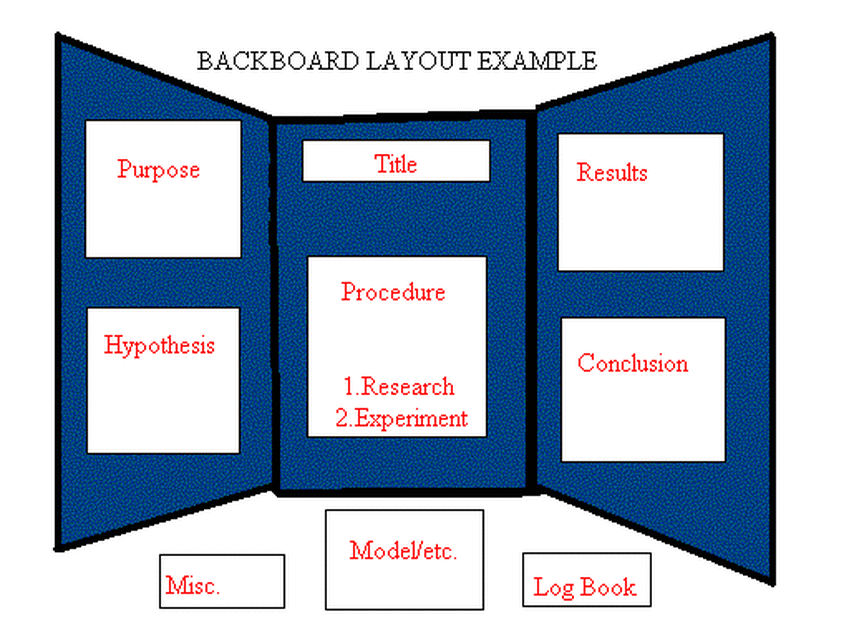
Science Fair: Display Backboard
Intel Display Guide is a 45 page presentation explaining how to prepare a display-certainly a very useful presentation if your project makes in to International! If you look at images of displays, you will notice that there is no consensus as to just what must be on the display. This Backboard Display example is typical. The trifold display backboards sold at Walmart or at an office supply store are fine. Shop around! Don't spend $12 on a backboard! Try to locate one for under $5.00. It is not necessary to buy the tags which say 'Methods' or 'Hypothesis', often called 'headers'. Just type and print them. Be sure to have color! Include photos of the experiment. Bring a model or any equipment used. (Leave chemicals and glassware at home.) A simple white backboard with construction paper and neatly printed information is fine. The judges are considering the merits of the project, not the amount of glitter glue or creative use of foam core. This Display Example has excellent color graphics, typed information, all neatly presented. The content is more important than its presentation as long as the content is scientifically accurate and the information is well understood by the student.

Science Fair: Title Page
Here is a title page to introduce the research paper. Some fairs request that the student remove his or her name. Be sure to check the local guidelines.
Nitrates in the Mill Creek watershed
Nitrates in Mill Creek
Deborah Stevens
Musselman High School
Correspondense regarding this report should be directed to Deborah Stevnens
Chemistry Teacher
Musselman High School
126 Excellence Way
Inwood WV 25428
Science Fair: Research Paper Example
Here is an example of a research paper so students can get an idea of the style required for competition.
Research Paper Body
Research Paper Body
Introduction
The null hypothesis for this experiment is that the nitrate levels in Mill Creek (at the public access point tested) will not exceed the safe drinking water standards during the thirty day test period. The alternative hypothesis for this experiment is that the nitrate levels in Mill Creek (at the public access point tested) will exceed the safe drinking water standards during the thirty day test period. Nitrates (NO3-) originate in fertilizers, sewage, run-off from farms and residences, faulty septic tanks, and erosion from natural nitrate sources. Natural water sources contain typically less than one ppm (mg/L) of nitrate/nitrogen (the form measured according to the Environmental Protection Agency (EPA) Clean Water Standards). The EPA posts “maximum contaminant levels” (MCLs) which include standards for microorganisms, disinfectants, disinfection byproducts, inorganic and organic chemicals, and radionuclides; nitrates are classified as inorganic chemicals. Nitrate levels in drinking water that exceed 10 mg/L can cause methemoglobinemia or “blue baby syndrome”; infants younger than six months of age are susceptible through contaminated water in bottles or water mixed with baby formula. The reason young infants are susceptible to “blue baby syndrome” is because their stomach acid is as concentrated as older children and adults. Bacteria can form in young infants’ stomachs that converts nitrates to nitrites (NO2-), which can be absorbed in the bloodstream, oxidizes iron in the hemoglobin of red blood cells, and forms “methemoglobin.” Methemogloboinemia describes the condition of a baby with elevated levels of methemoglobin and is potentially fatal; infants may be treated with methylene blue solutions. Consequently, it is important to monitor nitrate levels in water.
Natural water sources usually contain less than 1mg/L (1ppm) concentration of nitrates and are limited as a resource. Nitrates are part of the nitrogen cycle and an essential plant nutrient. In a natural, healthy ecosystem, excessive nitrate levels are seldom a problem. However, farms, faulty septic systems, and residential neighborhoods can contribute to excessive nutrient run-off into neighboring water systems. The Chesapeake Bay watershed implicate excessive nutrient run-off (particularly nitrate and phosphate nutrients) as the chief problems currently confronting the Bay.
Science Fair: Abstract
Here is an example of an abstract.
The Effects of Nitrates on the Mill Creek Watershed
Abstract
Nitrate in Water examines the effect of excess nitrate nutrients in a local stream, Mill Creek, at a public access area in Bunker Hill, Westy Virginia. The study measures the nitrate levels in the stream over a thirty day period using standard LaMotte test procedures.
Science Fair: Research Paper
Research Paper Outline
Title Page
Name of the Project
Teacher's Name
Centered on letter-sized paper
Abstract
Summary of the Project
My students often struggle to write a research paper. Here is an outline. One tip which can help is to begin with presentation slides for each item, beginning with the title. Students can print the slideshow for their display board.
Research Paper
1. Abstract
2. Introduction
– Literature review (What is an alcohol rocket car?)
– Independent Variable
– Dependent Variable(s )
– Controlled Variable(s)
– Confounding Variable(s)
– Purpose
– Rationale (Why?)
– Hypothesis
3. Materials
4. Methods or Procedures
5. Results (Data, chart, table, or graph)
6. Discussion
– Did the experimental data support or refute the hypothesis?
– Describe the mean, median, and mode.
– Describe the variance and standard deviation.
7. Conclusion
– This section explains the findings or what happened. Did anything unexpected happen?
– How did your experimental results compare to other researchers'?
– Can you offer an explanation for the results?
– Is more study recommended or indicated? (More study is indicated.)
– Offer ways to improve the experiment next time.
8. Bibliography (Ideally conforming to MLA style)
Title Page
Name of the Project
Teacher's Name
Centered on letter-sized paper
Abstract
Summary of the Project
My students often struggle to write a research paper. Here is an outline. One tip which can help is to begin with presentation slides for each item, beginning with the title. Students can print the slideshow for their display board.
Research Paper
1. Abstract
2. Introduction
– Literature review (What is an alcohol rocket car?)
– Independent Variable
– Dependent Variable(s )
– Controlled Variable(s)
– Confounding Variable(s)
– Purpose
– Rationale (Why?)
– Hypothesis
3. Materials
4. Methods or Procedures
5. Results (Data, chart, table, or graph)
6. Discussion
– Did the experimental data support or refute the hypothesis?
– Describe the mean, median, and mode.
– Describe the variance and standard deviation.
7. Conclusion
– This section explains the findings or what happened. Did anything unexpected happen?
– How did your experimental results compare to other researchers'?
– Can you offer an explanation for the results?
– Is more study recommended or indicated? (More study is indicated.)
– Offer ways to improve the experiment next time.
8. Bibliography (Ideally conforming to MLA style)
Science Fair: Step One
Where to begin? Begin with an idea. Start with Science Buddies, a terrific site with thousands of ideas. Once the idea is fixed, it is time to write a hypothesis. There should be two parts: the null hypothesis and the alternative hypothesis. Here is an example.
Hypothesis
Hypothesis
The null hypothesis for this experiment is that the average nitrate levels in Mill Creek (at the public access point in Bunker Hill) will not contain exceed safe drinking water standards during the thirty day period of water testing.
The alternative hypothesis for this experiment is that the average nitrate levels in Mill Creek (at the public access point in Bunker Hill) will contain nitrate levels that do exceed safe drinking water standards during the thirty day period of water testing.
Thursday, December 4, 2014
Apologia Chemistry and Physical Science Labpaqs
One issue Homeschool co-ops and families encounter is access to chemicals. Home Science Tools is an excellent resource for small quantities of chemicals. I order materials from Amazon or buy household chemicals at Walmart. When I worked at a small, private school, there was little in the way of materials. I learned that the local pharmacy or grocery store had many common chemicals at vastly reduced prices. I have used household chemicals in labs ever since. So, how does one determine their formulas? Some household chemicals, such as Epsom salts, have the formula on the package. The Illustrated Guide to Household Chemistry has a table of easy to assess chemicals along with fairly complex labs, which have been professionally reviewed.
I accidentally ran across Labpaqs on Shop Good Will, under the heading of small scale labs or lab kits. I did some research and several colleges and programs use custom kits for distant learning. The Labpaq kits have goggles and a surprising number of sophisticated materials. This type of convenience comes at a price; I got a set on Ebay for much less than retail.
In any case, all of the materials our classes have used, with the exception of some vials and test tubes which were donated, originate from Home Science Tools, Amazon, Walmart, or a Labpaq. We set up lab stations in the garage where the ventilation is good-but, the lighting could use a boost. I want to encourage the use of small scale labs whenever possible. Collect cassette cases to hold test-tubes and purchase reaction plates, which only hold small volumes. We use craft sticks, toothpicks and disposable pipers and toss them to reduce cross contamination. Small scale labs allow the kids to repeat experiments several times without extra costs or hazards, too.
I accidentally ran across Labpaqs on Shop Good Will, under the heading of small scale labs or lab kits. I did some research and several colleges and programs use custom kits for distant learning. The Labpaq kits have goggles and a surprising number of sophisticated materials. This type of convenience comes at a price; I got a set on Ebay for much less than retail.
In any case, all of the materials our classes have used, with the exception of some vials and test tubes which were donated, originate from Home Science Tools, Amazon, Walmart, or a Labpaq. We set up lab stations in the garage where the ventilation is good-but, the lighting could use a boost. I want to encourage the use of small scale labs whenever possible. Collect cassette cases to hold test-tubes and purchase reaction plates, which only hold small volumes. We use craft sticks, toothpicks and disposable pipers and toss them to reduce cross contamination. Small scale labs allow the kids to repeat experiments several times without extra costs or hazards, too.
Apologia Chemistry and Physical Science
The Chemistry class is in the midst of moles. Two weeks ago they did a lab in which they prepared a series of 1M (one molar or one mole per liter) solutions for the Physical Science class' precipitate lab while the Physical Science class used Flinn's Putting the Ions in Their Hands activity, previously mentioned in earlier blog pages. Yesterday, the Chemistry kids prepared more solutions for the Physical Science kids. One of the students had been absent two weeks ago and I wanted him to have this experience. Besides, two weeks is a long time to remember a relatively new skill; I decided it would be good for them to prepare some more solutions. The Chem kids made 1M solutions of copper II sulfate, magnesium sulfate (Epson salts), sodium chloride (table salt), potassium chloride (fake table salt), calcium chloride (Driveway Heat), and silver nitrate. I have small 50 mL vials which were donated. The kids have to calculate the respective molar masses and then combine 0.1 moles in a total of 100 mL. The key is to combine the salt with about 50 mL of water in a flask and then add water to make a total of 100 mL of solution. If the kids measure a volume of 100 mL of water and then add the salt, the total concentration won't be 1 M. The kids ran into a hitch when they learned there wasn't enough silver nitrate powder to prepare a total of 100 mL and had to set up a proportion to determine how much total volume they could prepare with the amount of silver nitrate they had on hand. See why I like this lab activity?
Meanwhile, the Physical Science kids were reviewing nomenclature. Last week, they had used similar solutions to observe precipitates. This week, I had the kids write the names of the compounds formed when they observed a change. I added a wrinkle. We wrote calcium or sulfate instead of
Ca +2or SO4 -2 on the vials. The kids had to look on their ion charts to determine if the species was a cation or anion. They were instructed to combine cations with anions. After they combined the ions, they wrote the names and formulas for the combinations that reacted or changed. The kids had the idea to write the names on craft sticks next to the reaction plates.
Just as a note, I have been bidding on Labpaq kits on Ebay and Shop Goodwill. One of the Labpaq kits, LP2598- CK 01 had lead nitrate, extra reaction plates and a small digital scale. I had purchased
another scale previously. This one is a fraction of the price. More on Labpaqs in the next post.
Meanwhile, the Physical Science kids were reviewing nomenclature. Last week, they had used similar solutions to observe precipitates. This week, I had the kids write the names of the compounds formed when they observed a change. I added a wrinkle. We wrote calcium or sulfate instead of
Ca +2or SO4 -2 on the vials. The kids had to look on their ion charts to determine if the species was a cation or anion. They were instructed to combine cations with anions. After they combined the ions, they wrote the names and formulas for the combinations that reacted or changed. The kids had the idea to write the names on craft sticks next to the reaction plates.
Just as a note, I have been bidding on Labpaq kits on Ebay and Shop Goodwill. One of the Labpaq kits, LP2598- CK 01 had lead nitrate, extra reaction plates and a small digital scale. I had purchased
another scale previously. This one is a fraction of the price. More on Labpaqs in the next post.
Apologia Chemistry and Physical Science
Here are some photos of the lab. The next post will explain the set-up and purpose.


Wednesday, December 3, 2014
Science Fair Resources: The Sequel
Science Fair 2015
I like Science Fair: judging, coaching, seeing the final projects, the whole process. I am the exception. The reason I promote Science Fair is that it embodies so many of the skills valued by employers and espoused by Common Core standards: public speaking, technical writing, research skills, working as a team, completing a project! I think every student should do this once. Here are some steps to getting started.
1. Start by looking at the local science fair guidelines. Here are the Berkeley County, WV High School Guidelines and Middle School Guidelines.
2. Most regional science fair expos follow the Intel rules and use their forms.
3. Once you are familiar with the rules chose a project; try starting with Science Buddies. Their web site has great suggestions. Students often ask if using a published idea is cheating. In science, any experiment must be replicable; so, using a science project idea is fine. Just don't copy a research paper and be sure to cite the project in your bibliography or work cited page.
4. Once you have an idea, write the hypothesis, which should contain both the null hypothesis and the alternate hypothesis. Null and Alternative Hypotheses set up the data for statistical analysis.
5. Next is the experiment. What are you testing? What are the independent and dependent variables? Identify the controlled or confounding variable. This you-tube video reviews Types of Variables.
6. The student should design and implement his or her experiment with a minimum of three trials. It is important to keep good records, take pictures, write notes, date experiments, and jot down sources for the experiment. Include pictures of the equipment, the student doing the experiment, and results, whenever possible. This is a good way to document the project.
7. The research paper can be daunting. Research paper outline and Research paper sample may help.
8. Once the experiment has been completed and analyzed, the report written, it is time to assemble the Project Display Board. Here are some Headers or Headings. Be sure to add photos and avoid pictures of faces, which may or may not be allowed. Come up with a colorful title and interesting question.
9. Usually, an abstract or brief summary of the project should be included with the forms and research paper. A copy of the abstract may be placed on the display board.
10. Judging at the Science Fair is easy if the student has done all of this work! When I judge Science Fair projects, I ask kids to tell me about their projects. The student should think about why he or she selected this project. Does it have implications for society, like a project on texting? Did anything surprising happen? What obstacles were encountered? What would you do differently next time? Students may memorize a speech; but, the best presentations are delivered by students invested in their projects.
I like Science Fair: judging, coaching, seeing the final projects, the whole process. I am the exception. The reason I promote Science Fair is that it embodies so many of the skills valued by employers and espoused by Common Core standards: public speaking, technical writing, research skills, working as a team, completing a project! I think every student should do this once. Here are some steps to getting started.
1. Start by looking at the local science fair guidelines. Here are the Berkeley County, WV High School Guidelines and Middle School Guidelines.
2. Most regional science fair expos follow the Intel rules and use their forms.
3. Once you are familiar with the rules chose a project; try starting with Science Buddies. Their web site has great suggestions. Students often ask if using a published idea is cheating. In science, any experiment must be replicable; so, using a science project idea is fine. Just don't copy a research paper and be sure to cite the project in your bibliography or work cited page.
4. Once you have an idea, write the hypothesis, which should contain both the null hypothesis and the alternate hypothesis. Null and Alternative Hypotheses set up the data for statistical analysis.
5. Next is the experiment. What are you testing? What are the independent and dependent variables? Identify the controlled or confounding variable. This you-tube video reviews Types of Variables.
6. The student should design and implement his or her experiment with a minimum of three trials. It is important to keep good records, take pictures, write notes, date experiments, and jot down sources for the experiment. Include pictures of the equipment, the student doing the experiment, and results, whenever possible. This is a good way to document the project.
7. The research paper can be daunting. Research paper outline and Research paper sample may help.
8. Once the experiment has been completed and analyzed, the report written, it is time to assemble the Project Display Board. Here are some Headers or Headings. Be sure to add photos and avoid pictures of faces, which may or may not be allowed. Come up with a colorful title and interesting question.
9. Usually, an abstract or brief summary of the project should be included with the forms and research paper. A copy of the abstract may be placed on the display board.
10. Judging at the Science Fair is easy if the student has done all of this work! When I judge Science Fair projects, I ask kids to tell me about their projects. The student should think about why he or she selected this project. Does it have implications for society, like a project on texting? Did anything surprising happen? What obstacles were encountered? What would you do differently next time? Students may memorize a speech; but, the best presentations are delivered by students invested in their projects.
Subscribe to:
Posts (Atom)
-
The class is completing their Designer Baby blogs. Finally. Yes,I sat on top of them in class. I still think the time investment is wort...
-
 The Co-op is reviewing for a series of cell quizzes and beginning with paper plate cell cycle models and mitosis with yarn. The first t...