Monday, April 20, 2015
Apologia Organic Chemistry Models

Apologia Chemistry: Summary of Organic Chemistry
Why did we detour last week into Organic Chemistry? What does Organic have to do with Modules Eight and Nine? Good questions. I wanted my kids to build molecular models. They have a pretty good grasp of electron configurations. Now, the trick is to lead them into Modules Eight and Nine. So after a crash course in organic nomenclature (IUPAC), the kids used these molecular kits to build models. The models allow them to see the bonds holding the molecules together, to ask why carbon has four holes and hydrogen only one in the ball. Most of all, the kids see that molecules are three dimensional. One last molecule.
Friday, April 17, 2015
WA Earth Science Oceans
the Earth Science class is doing several programs simultaneously: the class material, the Soar grant, instructional prep, and immersion into technology. This week the class reviewed two of the slideshows fromPrentice Hall PowerPoint slideshows. The kids are working through material and e-modules Cacapon Institute, Fieldscope, and GLOBE. Yes, it is a lot! I want the kids to be able to plan and prep lessons for othe classes, the field day, and the stream assay. Stay posted!
Wednesday, April 15, 2015
Apologia: Technology for Physical Science
The Physical Science class is completing their blogs. Today, one group created videos explaining how to use the Sparklink interface with an iPad. Since they were using the iPad, they filmed will a cell phone camera. The cell phone doesn't upload to you-tube but will upload to Google+. No, I have no idea why it stalls uploading to You-tube. The kids researched how to transfer video from Google+ to You-tube without success. I did some research and finally was able to use a laptop to upload them, but not the iPad. Take a look!
Timelines
One skill I think is important to have is time-lines. My kids were given a list of scientists who contributed to the development of atomic theory and quantum theory. Here are two examples. Please note the students color coded each scientist's birth, death, and major contribution. I think students should use graph paper with the years in even intervals, say five or ten years. Students can create timelines on Excel, too. For me, I like to have kids make graphs, concept maps, and timelines on paper before using the technology.


Tuesday, April 14, 2015
WA Portfolios
I saved some of the images from project this year in an imgur file. Please take and make a hard copy for the portfolios.
Portfolio pix
Portfolio pix
Monday, April 13, 2015
Apologia Chemistry Footnote to Organic
If you watched the video in the last post, the instructor mentions types of butyls. What a pain. If only scientists would stick to IUPAC things would be easier. But, they don't. Learn the Butyls has a good explanation with examples.
Apologia Chemistry: Organic Chemistry
In Modules Eight and Nine, Dr. Wile reviews Lewis structures, bonding, polyatomic ions, and molecular geometry. My Co-op Chemistry class is going to do an introductory lesson to Organic Chemistry. Why? Once the kids build the models, we will rewind and put bonds, Lewis structures, polyatomic ions, and molecular geometry into the context of molecules. I have models I bought off EBay and Good Will, on-line.
Model Pix


Here is the plan. First, the kids are treated to an introduction to alkanes, the simplest organic molecules. I treat organic nomenclature in the same manner as inorganic nomenclature: hands-on. I do a brief introduction followed by examples, and show the kids several ways to represent structural molecules. Below are both a text and video introduction to Organic Chemistry.
Introduction to Organic Nomenclature
Next, the kids practice writing molecules.
Organic Nomenclature 10.4. 10.4 Key
Nomenclature Part 2 10.7. 10.7 Key
Once, they have an idea of how to write them, I have the kids use the models to build the molecules. Then, I repeat the process with alkenes, more practice, and more models. The key is to explain that organic chemistry is different branch of Chemistry. Most of the Apologia text is Inorganic Chemistry. Ironically, many applications involve Organic rather than Inorganic; yet, high school chemistry is largely Inorganic. Polymers are Organic. The molecular structures of chocolate and caffeine are Organic.
Table of Functional Groups
Once, we after we finish this side-track into Organic, the class will return to Modules Eight and Nine to see if the material makes more sense in the light of Organic.
Model Pix
Here is the plan. First, the kids are treated to an introduction to alkanes, the simplest organic molecules. I treat organic nomenclature in the same manner as inorganic nomenclature: hands-on. I do a brief introduction followed by examples, and show the kids several ways to represent structural molecules. Below are both a text and video introduction to Organic Chemistry.
Introduction to Organic Nomenclature
Next, the kids practice writing molecules.
Organic Nomenclature 10.4. 10.4 Key
Nomenclature Part 2 10.7. 10.7 Key
Once, they have an idea of how to write them, I have the kids use the models to build the molecules. Then, I repeat the process with alkenes, more practice, and more models. The key is to explain that organic chemistry is different branch of Chemistry. Most of the Apologia text is Inorganic Chemistry. Ironically, many applications involve Organic rather than Inorganic; yet, high school chemistry is largely Inorganic. Polymers are Organic. The molecular structures of chocolate and caffeine are Organic.
Table of Functional Groups
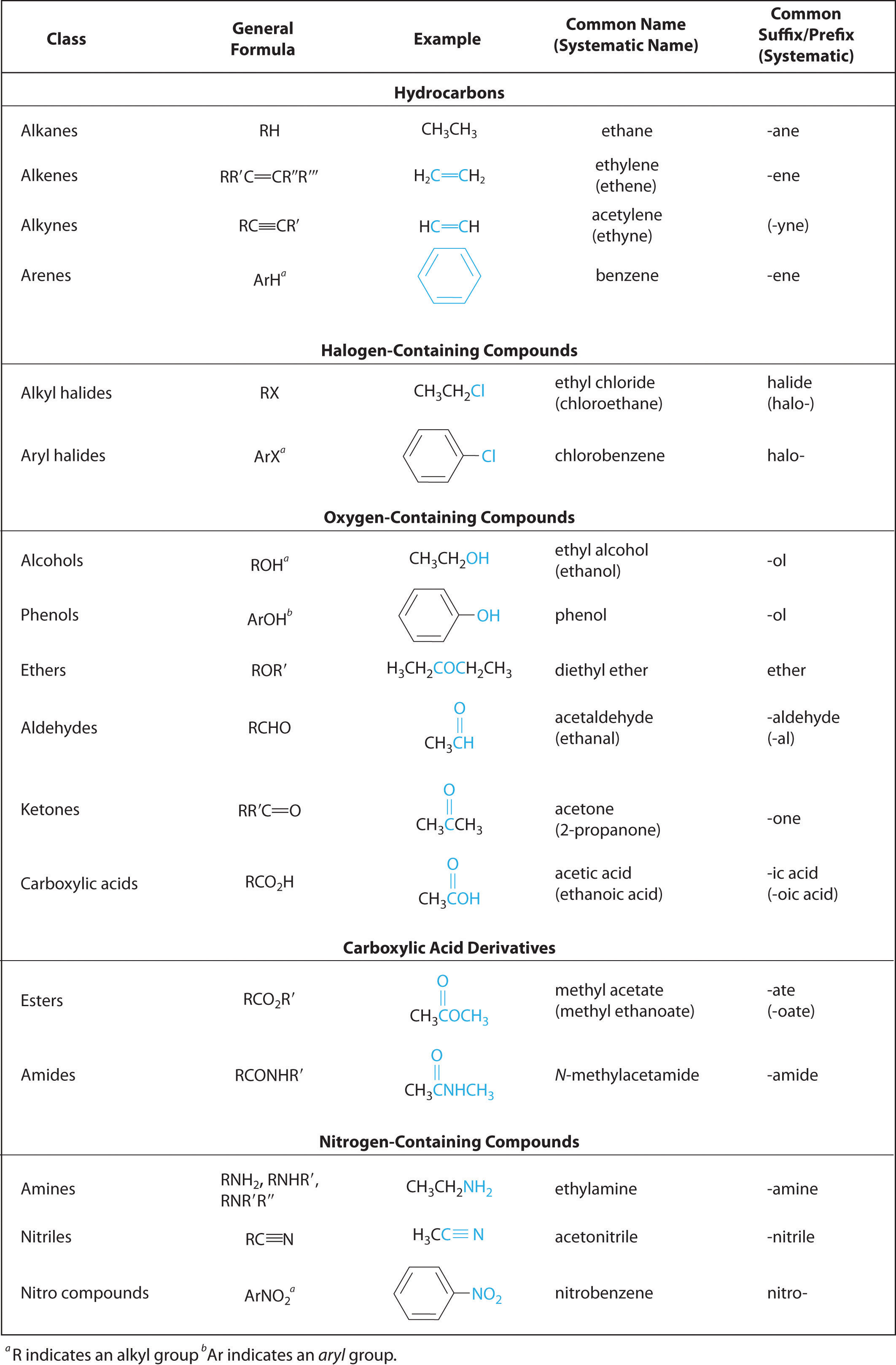
Once, we after we finish this side-track into Organic, the class will return to Modules Eight and Nine to see if the material makes more sense in the light of Organic.
Saturday, April 11, 2015
Apologia Chemistry: Acids and Bases
Once the kids have completed the household acid and base lab, I usually have them complete an acid-base series dilution with pH strips, using 1M HCl and 1 M NaOH. Once the dilution is prepared, the kids can measure the pH with strips, Universal indicator, or a pH probe. In an earlier post I explained that the TI 84 graphing calculator is preloaded with Easy Data software. Vernier sells a temperature probe which connects directly to the calculator. Vernier also has an adapter for the TI 84 which can connect a pH probe. I have shopped for used sensors on EBay and purchased them for around $40. A graphing calculator, temperature probe, and pH sensors are investment equipment for a Home-School Co-op. Outside of science labs, the kids can take the calculator and probes outside collect data, such as stream assays.
Apologia Chemistry: Acids and Bases
The Acids and Bases unit lends itself to a host of labs and activities. PhET has a good virtual lab.
One activity I always use is an acid base sort. I pull a bunch of household materials: baking soda, Epsom salts, vinegar, tums, lemon juice, clear soap, clear soda, apple juice, ammonia solution, table salt, etc. the kids use litmus paper and broad scale pH paper to determine whether the material is an acid or base. The solids must be dissolved in water before testing. I like the kids to create a data table with both the common names, chemical names, and chemical formulas to reinforce these skills. Here is what I mean by a table
Common Name. Chemical Name. Formula. Acid, Base, or Neutral
Baking Soda. Sodium bicarbonate. NaHCO3. Base
One activity I always use is an acid base sort. I pull a bunch of household materials: baking soda, Epsom salts, vinegar, tums, lemon juice, clear soap, clear soda, apple juice, ammonia solution, table salt, etc. the kids use litmus paper and broad scale pH paper to determine whether the material is an acid or base. The solids must be dissolved in water before testing. I like the kids to create a data table with both the common names, chemical names, and chemical formulas to reinforce these skills. Here is what I mean by a table
Common Name. Chemical Name. Formula. Acid, Base, or Neutral
Baking Soda. Sodium bicarbonate. NaHCO3. Base
Apologia Chemistry Acids and Bases
This past week was consumed with family, cooking, and games! How good is God! Back to business. A unit on Acids and Bases is on the horizon. My friend, Teri, sent me this hysterical parody video to launch the unit.
Subscribe to:
Posts (Atom)
-
The class is completing their Designer Baby blogs. Finally. Yes,I sat on top of them in class. I still think the time investment is wort...
-
 The Co-op is reviewing for a series of cell quizzes and beginning with paper plate cell cycle models and mitosis with yarn. The first t...